
Origin
Portraits of Indigenous children and their communities from around the world in a stunning presentation emphasizing community and a connection to the land and the environment.
Subject: Indigenous Learning and Authentic Cultural Experiences
Grade: 3 – 12
Ten locations across Calgary showcase Indigenous placemaking installations. These include: Central, Crowfoot, Fish Creek, Forest Lawn, Judith Umbach, Saddletowne, Seton, Signal Hill, Shawnessy, and Village Square libraries. Learn more about Indigenous Placemaking at the Library.
The City of Calgary also has a growing Indigenous Public Art Program, with artwork installed in both indoor and outdoor spaces in the city. Learn more at calgary.ca/arts-culture/public-art/indigenous-works
“To me, placemaking means being made to feel at home, welcome, seen, and represented in public spaces.” Jasmine, Indigenous Placemaking Coordinator at Calgary Public Library.
The Placemaking Art program at Calgary Public Library brings together artists, each with a connection to Treaty 7, to contribute art to ten public libraries. Indigenous artists create traditional and contemporary artworks that promote understanding of Indigenous peoples and cultures within Treaty 7 territory. These pieces make Indigenous visual and oral storytelling more prominent in Library locations.
The creation of these works inspires collaboration among artists of all disciplines, backgrounds, and experience levels. Having these pieces in the Library helps create an inclusive space for sharing and gathering of all Nations and communities to learn and grow together.

Welcome Wall, Level 1, Central Library
Engage with artist statements, curatorial notes, and interviews to understand the work and the artist’s point of view.
View contemporary Indigenous work as a living, evolving expression rather than a historical artifact. While traditional methods like beadwork and carving may be used, these are often applied to contemporary themes.What is the difference between cultural practice and art making? Consider these quotes from Indigenous artists:
Artist Jeffrey Gibson from the Mississippi Band of Choctaw says: “[Cultural practice and art making] have completely different intentions, completely different narratives, completely different histories, and, again, I think that must come from Native people. Oftentimes, we talk about our work in terms of a very personal biography and narrative.”
In Canadian Art Magazine (July 2018) Leanne Betasamosake Simpson writes that "For Indigenous peoples — the restriction of our knowledge production and our influence to the local or into confined Indigenous spaces, or to “culture” rather than it being positioned as affecting — not just for Indigenous peoples, but for the world."
Rebecca Belmore, of the Lac Seul First Nation (Anishinaabe), says “The role of an artist is a worker, art-making is a job ... I am the artist amongst my people. Every society has its artists, and we have the responsibility to speak about how we are collectively in this moment in time. We have the responsibility to carry the past and look towards the future.”
Some artists or communities may request no photography of their work, especially during certain ceremonies or exhibitions. Think about what the art teaches you for a moment. Don’t be in a hurry to post pictures or explain what they mean. Let the story come first. Be careful when you share and give credit to the artist. Raise the words of Indigenous people. Be kind when you talk about what you’ve learned. Tell stories, but don’t change them. Respecting the art that you talk about, strengthens it.
Lead students in a discussion about how they might look at and speak about Indigenous art in a respectful way. Emphasize that students should not appropriate an artist’s style or make a copy of an artwork. Every artist has a distinctive personal style that expresses their own viewpoints and students should strive to do the same. However, students may choose to represent similar themes, such as respect for the land, or be inspired by a formal element, such as using bright colours.
Additional activities to encourage student reflection on art are available in the Caretakes of the Land Educators Guide at calgarylibrary.ca/caretakers-of-the-land
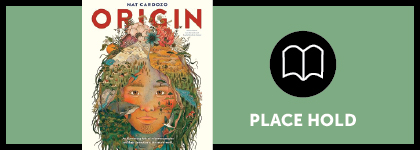
Portraits of Indigenous children and their communities from around the world in a stunning presentation emphasizing community and a connection to the land and the environment.
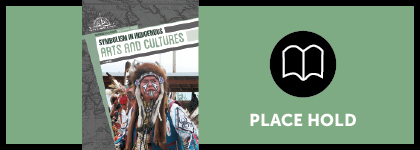
From the past and into the future, Indigenous Life in Canada reveals the challenges Indigenous peoples face, celebrates their diverse cultures, and highlights the contributions they make in Canada.
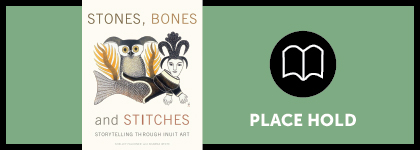
Stones, Bones and Stitches is a fascinating and beautiful introduction to the art of the North. Included are eight different works from sculpture to prints, each highlighted with introductions to the artists, the materials they used, geography, legends, a